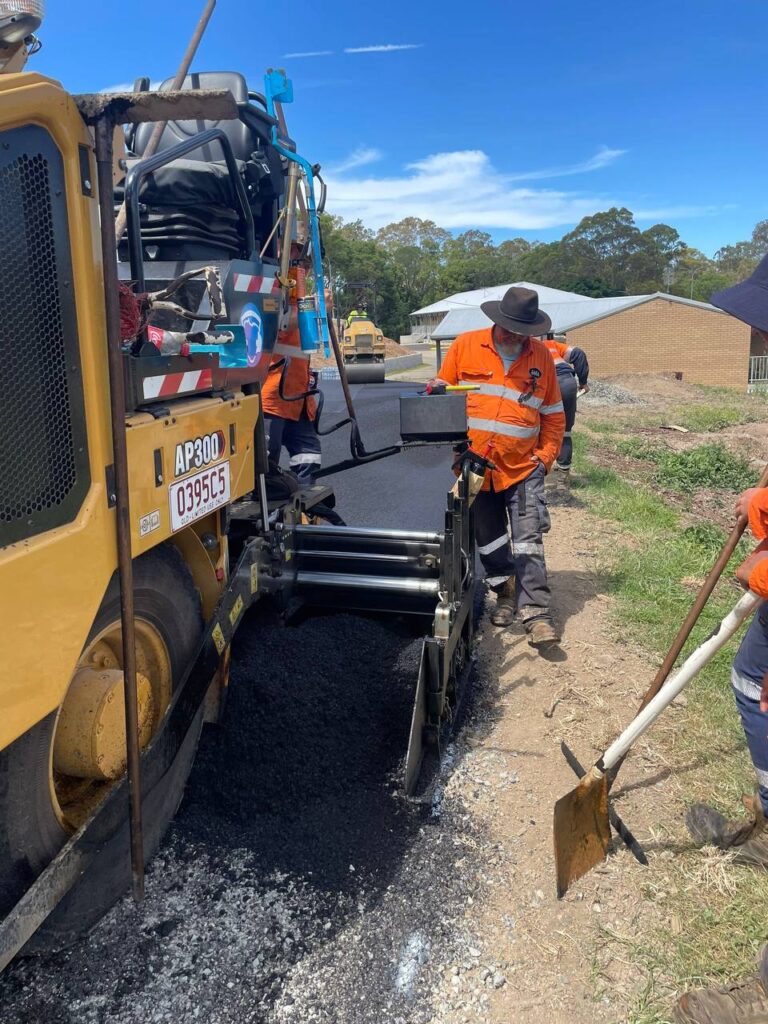
Asphalt should provide a firm, stable surface capable of supporting the vehicles it was designed to accommodate. If wheel paths are becoming noticeably lower, parking areas are developing depressions or sections of pavement appear to sink whenever they are repeatedly trafficked, the problem deserves closer attention. Sinking asphalt can indicate that the pavement beneath the visible surface is no longer providing adequate support.
For property owners and businesses in Gympie, QLD, simply filling a depression or placing new asphalt over a sunken area may not address the cause. Gympie Surfacing Solutions assesses the complete pavement condition to determine why movement is occurring and what type of repair, preparation or resurfacing is appropriate.
Why Does Asphalt Start to Sink?
The asphalt surface is only the upper part of a pavement system. Beneath it are prepared supporting layers that distribute vehicle loads and provide a stable platform.
When those layers move, settle or lose strength, the asphalt can deform under traffic.
Common causes of sinking asphalt include:
- Weak or deteriorated pavement foundations
- Inadequate compaction
- Water entering the pavement
- Poor surface drainage
- Localised ground settlement
- Repeated heavy vehicle loads
- Insufficient pavement strength for current traffic
- Deterioration around previous repairs
Understanding which of these factors is responsible is important before deciding how the affected area should be restored.
Pay Attention to Where the Sinking Is Occurring
The location and shape of a depression can provide useful information.
If sinking follows the same wheel paths used by vehicles, repeated loading may be contributing to rutting or movement within the pavement. If one isolated area has dropped while the surrounding asphalt remains stable, localised settlement or a weak section underneath may be responsible.
Depressions around pavement edges can indicate a loss of support, while low areas that consistently hold water may point towards a combination of drainage and structural problems.
The pattern matters because different causes require different approaches.
Stop Treating It as Just a Surface Problem
One of the most important things to understand about sinking asphalt is that the visible deformation may only be a symptom.
Adding material to the depression can make the area level again, but if the supporting pavement continues moving, the new surface may eventually sink as well.
A more effective approach is to determine:
- Whether the base remains stable
- How deep the deterioration extends
- Whether water is entering the pavement
- Whether the existing pavement can support current traffic
- Whether settlement is continuing
This information helps establish whether a localised repair is sufficient or deeper pavement work is needed.
Check Whether Water Collects in the Depression
Once asphalt begins sinking, the resulting low area can collect rainfall.
This can create an ongoing deterioration cycle. Water remains in the depression, finds pathways through cracks or damaged asphalt and potentially affects the supporting pavement. Vehicles then continue applying loads to an increasingly vulnerable section.
Watch for signs such as:
- Persistent puddles
- Cracking around the depression
- Loose asphalt
- Potholes beginning to develop
- Softness around the affected area
- The depression becoming progressively deeper
Where drainage is contributing to the problem, it should be considered as part of the repair rather than treated separately.
Could Poor Compaction Be Responsible?
Compaction is fundamental to pavement stability.
During construction, the supporting materials need to be appropriately placed and compacted before asphalt is installed. If a section remains insufficiently compacted, regular traffic can gradually compress it further.
As the pavement underneath settles, the asphalt follows.
This type of problem can sometimes explain why one particular section deteriorates while nearby asphalt remains relatively level.
Vehicle Weight and Frequency Matter
A pavement needs to be appropriate for the loads it regularly carries.
A surface primarily used by ordinary vehicles experiences different demands from one that frequently supports heavier vehicles or repeated commercial traffic. If site use changes over time, the existing pavement may be subjected to loads beyond those it was originally intended to accommodate.
Repeated loading can expose weaknesses in:
- Wheel paths
- Parking positions
- Entrances and exits
- Loading areas
- Turning zones
When sinking occurs primarily in these locations, traffic patterns should form part of the pavement assessment.
Turning and Braking Can Increase Pavement Stress
Vehicles do not only apply downward pressure.
Turning, braking and acceleration create additional forces between the tyres and pavement. Areas where these movements occur repeatedly can experience greater stress than sections where vehicles simply travel in a straight line.
If the asphalt is already weakened by poor support or moisture, concentrated vehicle movements can accelerate deformation.
When Does Sinking Become a More Serious Warning Sign?
Minor surface irregularities and substantial pavement deformation should not be treated as the same problem.
Professional assessment becomes increasingly important when:
- Wheel ruts are becoming progressively deeper
- Large depressions have formed
- Cracks are spreading around sunken sections
- Potholes are developing within the depression
- Water repeatedly collects in low areas
- Previous repairs have also sunk
- Multiple sections are beginning to deform
These signs can indicate that deterioration extends beneath the asphalt wearing surface.
Can the Sunken Area Be Repaired Locally?
Sometimes.
If deterioration is confined to one section and the surrounding pavement remains structurally sound, a targeted repair may be appropriate.
Depending on the condition found, this can involve removing failed asphalt and unstable material, rebuilding or recompacting the affected pavement and restoring the surface.
The important point is that the repair needs to extend far enough to address the actual failure. Replacing only the upper asphalt layer is unlikely to solve a problem originating deeper within the pavement.
When Should Resurfacing Be Considered?
Asphalt resurfacing can be suitable when the existing pavement structure remains sufficiently stable but the wearing surface has become broadly deteriorated.
It can restore a smoother and more consistent asphalt surface across a larger area.
However, significant sunken sections should be corrected before resurfacing. Installing a new layer directly over unstable pavement can transfer existing movement into the new surface.
Preparation may therefore involve:
- Removing failed sections
- Correcting unstable pavement
- Restoring appropriate levels
- Improving drainage
- Recompacting supporting materials
- Preparing the existing surface for new asphalt
Proper preparation is what allows resurfacing to address the pavement effectively rather than simply disguise its current condition.
What If Several Areas Are Sinking?
Multiple depressions can suggest that the problem is more widespread.
If rutting, settlement and deformation are appearing throughout the pavement, the overall structure should be assessed before deciding on individual repairs.
Widespread movement can indicate that larger sections of the pavement are no longer providing adequate support.
In these circumstances, continually repairing isolated depressions may not be the most appropriate approach. Broader pavement reconstruction or preparation may need to be considered before resurfacing.
Do Not Ignore the Surrounding Asphalt
The area immediately around a depression can also provide important warning signs.
Cracking around the edges can indicate that the asphalt is being stressed as the pavement moves. Loose aggregate, broken edges and small potholes may show that deterioration is beginning to spread beyond the original sunken section.
Addressing the cause before surrounding asphalt becomes extensively affected can help contain the problem.
Why Professional Assessment Matters
The depth of pavement failure cannot always be determined from its appearance alone.
Two depressions that look similar at the surface may have very different causes. One may involve relatively shallow deterioration, while another may be associated with a weakened foundation or ongoing drainage problem.
A professional assessment considers the complete situation, including:
- Surface deformation
- Pavement stability
- Drainage
- Traffic patterns
- Existing cracks and potholes
- Previous repairs
- Condition of adjoining asphalt
The objective is to determine why the pavement is sinking before selecting the repair method.
Conclusion
When asphalt starts sinking under vehicles, the problem should be investigated rather than repeatedly levelled at the surface. Weak pavement foundations, inadequate compaction, water penetration, settlement and concentrated vehicle loading can all contribute to depressions and rutting.
The appropriate solution depends on whether the deterioration is localised or widespread and whether the pavement underneath remains structurally stable. Some areas may require targeted repairs, while more extensive deterioration can require deeper preparation before asphalt resurfacing is undertaken.
For property owners and businesses in Gympie, QLD, Gympie Surfacing Solutions provides professional asphalt and bitumen resurfacing based on the actual condition and use of the pavement. If wheel ruts or sunken areas are becoming increasingly noticeable, arranging a professional assessment can help identify the underlying cause and determine the most appropriate way to restore a stable, reliable surface.
Call us on: 07 4158 7474
Click here to find out more about Gympie Surfacing Solutions
Click here to complete our contact form and see how we can help with your surfacing needs.