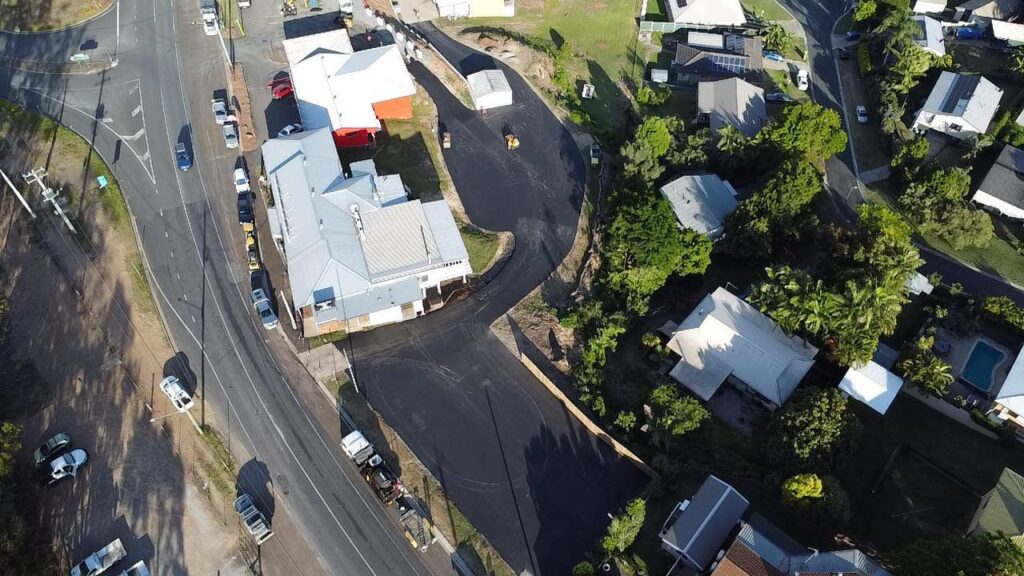
Why asphalt problems often return
A patch can improve the appearance of damaged asphalt, but it may not solve the reason the damage developed. If the underlying issue remains, cracks, potholes or loose edges can reappear nearby or in the same spot.
Common causes include water entering through cracks, poor drainage, movement in the base, heavy or repeated traffic, and wear across an ageing surface. Several of these issues can look similar from above, so choosing a repair based only on what is visible may lead to repeat work.
For property owners in Gympie, QLD, a professional assessment can help identify what is happening beneath and around the damaged area before deciding on the next step.
What an asphalt assessment looks at
An experienced surfacing contractor will inspect the surface as a whole, not just the most obvious defect. This may include checking:
- where cracks, depressions or potholes are appearing
- whether water is pooling or flowing towards the damaged area
- the condition of the asphalt around previous repairs
- signs of movement or weakness in the supporting base
- how the area is used and the traffic it needs to handle
The pattern and location of damage can offer useful clues. For example, recurring potholes around a low point may indicate that drainage needs attention, while widespread cracking can suggest that a local patch will not address the full problem.
How assessment can guide the right repair
The aim is to match the repair to the cause and extent of the damage. Depending on the findings, a suitable approach might involve a localised repair, work to improve drainage, resurfacing a larger section, or addressing a weak base before applying a new asphalt layer.
An assessment also helps define the affected area. Treating too small a section can leave deteriorated edges beside the repair, while resurfacing without correcting underlying movement or water problems may only cover the symptoms temporarily.
A professional recommendation should explain:
- what is causing the visible damage
- whether the issue is isolated or spread across the surface
- what preparation or base work is required
- which repair or resurfacing option best suits the site
This gives property owners a clearer basis for planning work and helps avoid applying the same short-term fix repeatedly.
Why preparation matters
Even a well-chosen repair depends on sound preparation. Damaged material may need to be removed, the repair area properly shaped, and the surface prepared so the new asphalt can bond effectively. Where water is contributing to deterioration, drainage and surface falls may also need consideration.
A careful assessment helps a contractor identify these requirements before work begins. It can also help set realistic expectations about what resurfacing can resolve and where further groundwork may be needed.
When to arrange an assessment
Consider seeking an assessment if potholes keep returning, cracks are spreading, water remains on the surface after rain, or previous repairs are breaking down. It is also useful when the asphalt is deteriorating across a broad area and it is unclear whether isolated repairs will be enough.
Conclusion
A professional asphalt assessment can help prevent repeat repairs by identifying the cause of damage and guiding the work towards the areas that need attention. For asphalt surfaces in Gympie, Gympie Surfacing Solutions can assess the condition of your site and discuss a practical resurfacing or repair approach. Contact the team to arrange an assessment.
Call us on: 07 4158 7474
Click here to find out more about Gympie Surfacing Solutions
Click here to complete our contact form and see how we can help with your surfacing needs.